
- A customer brings a vehicle to your workshop. You inspect it, identify the problem, purchase spare parts, assign a mechanic, complete the repair, and collect payment.
A few weeks later, the same customer returns with another problem.
You try to remember what was repaired during the previous visit, how much the customer paid, which parts were replaced, and whether the vehicle had any outstanding issues.
But the details are scattered across old notebooks, WhatsApp conversations, receipts, and the memories of different employees.
This may seem like a small inconvenience, but poor record-keeping can quietly cost an auto repair business money, customers, time, and opportunities for growth.
Many workshop owners focus on getting more customers and completing more repairs without realising that disorganised business records may be holding them back.
Let's examine the hidden costs of poor record-keeping and why every auto repair workshop needs a reliable way to manage its information.
1. You Lose Money Without Knowing Where It Went
One of the biggest consequences of poor record-keeping is the inability to account for money coming into and leaving the workshop.
A mechanic may collect money for spare parts, another employee may receive payment from a customer, and the workshop owner may make several small purchases throughout the day.
If these transactions are not recorded properly, it becomes difficult to determine:
How much money the workshop received.
How much was spent on spare parts.
How much customers still owe.
Which expenses were related to specific repairs.
How much the business actually earned.
At the end of the month, the owner may discover that the money available is far less than expected.
What to do: Record every customer payment and business expense. Keep parts costs, labour charges, and other expenses clearly documented.
2. Customers Can Be Charged Incorrectly
Imagine a customer returns to your workshop after several months.
You remember repairing the vehicle, but you cannot find the original payment record or remember exactly what the previous repair covered.
This can create confusion when discussing previous charges or determining whether a new problem is related to an earlier repair.
Without proper records, workshops may accidentally charge customers twice for certain services or struggle to explain previous transactions.
What to do: Maintain a payment and repair history for every customer and vehicle. This makes it easier to verify previous work and answer customer questions.
3. You Keep Repeating the Same Diagnostic Process
When a vehicle returns with a similar problem, previous diagnostic findings can provide useful information.
However, if the workshop has no record of earlier inspections, fault findings, or repairs, the mechanic may have to start investigating from scratch.
This can lead to:
Repeated diagnostic work.
Wasted technician time.
Unnecessary testing.
Delayed repairs.
Increased customer frustration.
A proper vehicle history helps mechanics understand what has already been investigated and repaired.
It does not replace a fresh diagnosis, but it provides valuable background information.
What to do: Document customer complaints, diagnostic findings, inspection results, and completed repairs for future reference.
4. You Forget Outstanding Customer Payments
Not every customer settles the full repair bill immediately.
Some customers make deposits and promise to pay the remaining balance later. Others may have agreed payment arrangements.
If these details are not properly recorded, outstanding payments can easily disappear from the workshop owner's attention.
For example, a workshop may have five customers owing a combined ₦250,000. Without a reliable record, the owner may not remember who owes what or how much has already been paid.
That money belongs to the business, but poor follow-up can make it difficult to recover.
What to do: Keep a record of each invoice, payment received, remaining balance, and payment date. Review outstanding balances regularly.
5. You Cannot Easily Identify Your Most Profitable Services
Not every repair service contributes the same amount to a workshop's earnings.
Some jobs may generate good revenue but require expensive parts and several hours of labour. Other smaller jobs may be completed quickly and contribute more towards covering operating expenses.
Without records, workshop owners may not know which services perform best financially.
They may continue investing time and resources in jobs that generate little profit while overlooking more worthwhile opportunities.
What to do: Review completed jobs, parts expenses, labour charges, and other relevant costs. Over time, this can help you understand which types of work contribute most to the business.
6. You Struggle to Resolve Customer Disputes
A customer claims that a component was replaced during the previous visit.
The mechanic remembers doing the work, but there is no invoice, job record, photograph, or parts documentation to confirm it.
Now the workshop has to rely on conflicting memories.
This can damage customer relationships, even when the workshop originally performed the repair correctly.
Good records provide a reference when customers ask questions about previous services.
What to do: Keep records of approved repairs, parts used, inspection findings, invoices, and relevant photographs.
7. Employees Can Make Costly Mistakes
When workshop information exists only in the owner's head or in scattered conversations, employees may not have access to the information they need.
A mechanic may begin work without knowing which repairs the customer approved. Another staff member may purchase the wrong part because the vehicle details were not recorded correctly.
These mistakes can result in wasted materials, repeated work, and unnecessary expenses.
What to do: Make important customer, vehicle, and repair information accessible to the relevant staff members. Establish a standard process for documenting every job.
8. You Cannot Properly Measure Workshop Performance
How many vehicles did your workshop complete last month?
How many jobs are still unfinished?
How much money is outstanding?
Which repairs took longer than expected?
If you cannot answer these questions confidently, you may be managing your business without enough information.
This makes it difficult to identify operational problems or determine whether the business is improving.
What to do: Maintain consistent records of completed jobs, unfinished repairs, payments, expenses, and customer activity. Review the information periodically to support business decisions.
9. Business Growth Becomes More Difficult
A workshop that handles five vehicles a week may manage its activities through memory and a few notebooks.
But what happens when it starts handling twenty, fifty, or more vehicles?
More customers mean more records, more payments, more repair jobs, and more information to manage.
A system that works when the business is small may become unreliable as operations expand.
Without organised records, the owner may spend more time searching for information, resolving mistakes, and supervising routine activities.
What to do: Develop a reliable record-keeping process early. Do not wait until the workshop becomes difficult to manage before organising its information.
What Records Should Every Auto Repair Workshop Keep?
A professional workshop should maintain records that cover its most important business activities.
Here are some of the essential records:
Record typeInformation to keepCustomer recordsNames, contact details, and customer historyVehicle recordsMake, model, registration number, and mileageInspection recordsInspection results, notes, and photographsDiagnosis recordsCustomer complaints, findings, and diagnostic reportsEstimatesProposed repairs, parts, labour, and expected costsJob ordersAssigned work and repair progressInvoicesCharges for completed workPayment recordsAmount received and outstanding balanceExpense recordsPurchases, operating expenses, and other costsService historyPrevious repairs and maintenance activitiesKeeping these records makes it easier to understand what has happened in the workshop and what still needs attention.
Paper Records vs Digital Record-Keeping: Which Is Better?
Paper records are familiar and can work for a small number of transactions.
However, they become difficult to manage when a workshop handles many customers and vehicles.
Paper record-keepingDigital record-keepingInformation is written manuallyInformation is entered electronicallyDocuments can be misplacedRecords can be organised in a digital systemSearching for old records can take timeRecords can be retrieved through available search functionsHandwriting may be difficult to understandInformation is displayed in a consistent formatMultiple notebooks may be requiredDifferent records can be managed within one platformDigital systems are not automatically a guarantee against mistakes. Information still needs to be entered accurately and updated consistently.
However, the right system can make record management significantly more organised.
How Mektrics Helps Auto Repair Workshops Keep Better Records
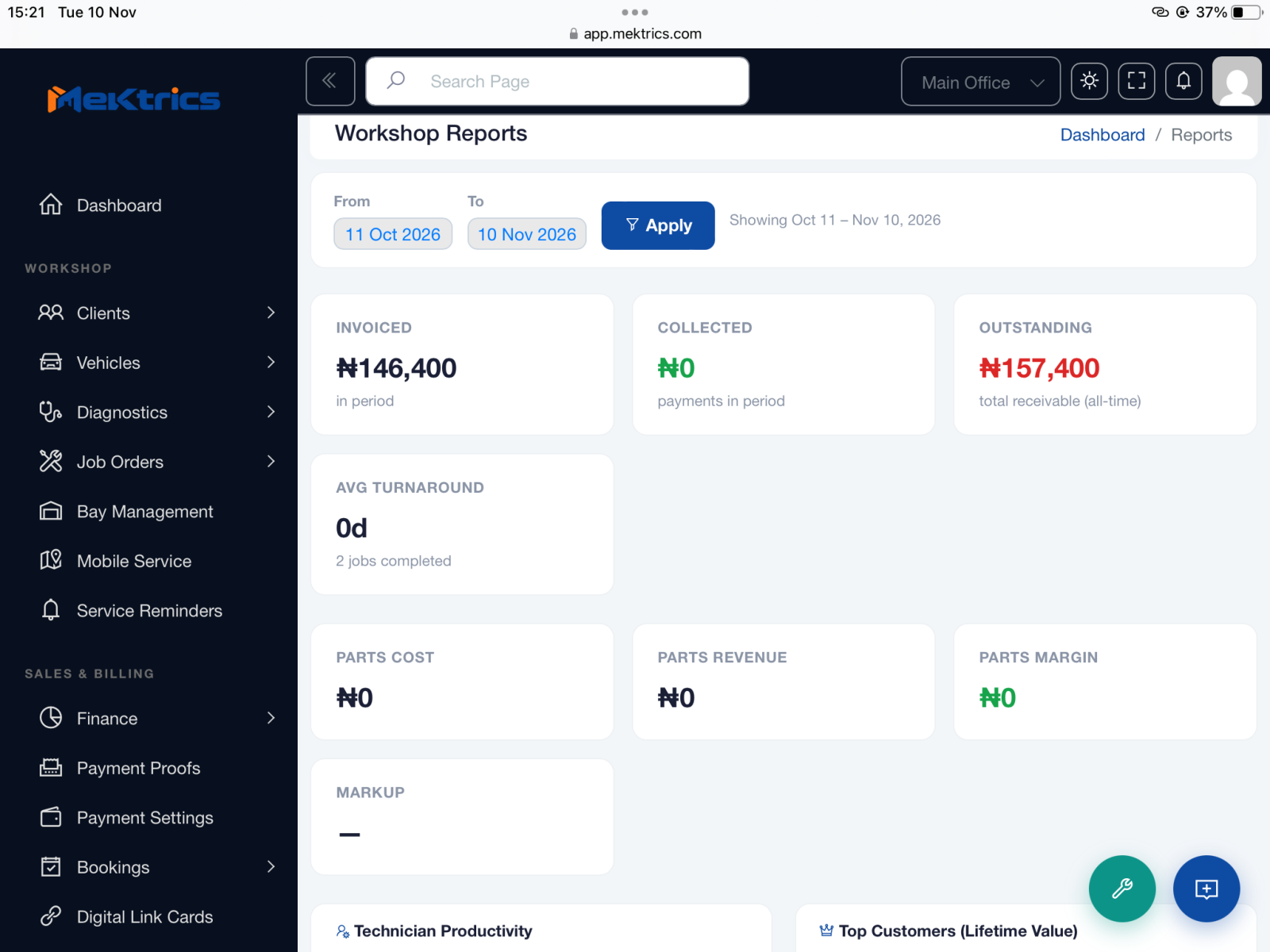
Mektrics is an auto repair workshop management system designed to make workshop activities more organised and less stressful.
Instead of relying entirely on scattered notebooks and conversations, workshops can use Mektrics to manage important information through a structured digital workflow.
The platform supports:
Customer management: Organise customer details and records.
Vehicle management: Register vehicles and maintain vehicle information.
Vehicle inspections: Document a 24-point check-in inspection using Pass, Attention, Fail, and N/A statuses, with notes and photographs.
Vehicle diagnosis: Record diagnostic information through an eight-step diagnosis workflow.
Estimates: Prepare estimates for proposed repair work.
Job orders: Manage repair-related work and its progress.
Invoices and payments: Support the workshop's billing and payment workflow.
Having these activities organised within a workshop management platform can reduce dependence on memory and scattered paperwork.
Frequently Asked Questions
1. Why is record-keeping important in an auto repair workshop?
Record-keeping helps workshops track customers, vehicles, repairs, expenses, payments, and previous services. It also helps reduce confusion and supports better business decisions.
2. What happens when a mechanic does not keep proper records?
Poor record-keeping can lead to forgotten payments, repeated diagnostic work, incorrect charges, misplaced information, customer disputes, and difficulty monitoring business performance.
3. Should small mechanic workshops keep digital records?
Yes. Even a small workshop can benefit from organised digital records. Starting early makes it easier to manage information as the business grows.
4. What is the best way to organise customer and vehicle records?
Create a consistent system that connects each customer to their vehicles, inspections, diagnosis findings, estimates, invoices, payments, and previous repairs.
5. Can workshop management software replace notebooks?
A digital workshop management system can reduce dependence on paper notebooks for many daily activities. However, workshops should maintain appropriate backups and follow good data-management practices.
Conclusion
Poor record-keeping is one of the hidden problems that can prevent an auto repair workshop from becoming more profitable and organised.
It can cause lost payments, repeated work, customer disagreements, wasted time, and poor business decisions.
The solution is to stop treating record-keeping as an optional administrative activity. It should be part of how every repair job is handled.
Whether your workshop serves a few customers or manages dozens of vehicles every week, organised records help you stay in control of your business.
Mektrics makes it easier to manage important workshop activities through a structured digital platform.
Visit Mektrics.com and take a step towards a more organised auto repair business.

0 Comments